As an Amazon Associate, we earn from qualifying purchases. Some links on this site are affiliate links at no extra cost to you. Our recommendations are based on thorough research and editorial judgment.


Why Many Households Use Both Electric and Gas Pressure Washers

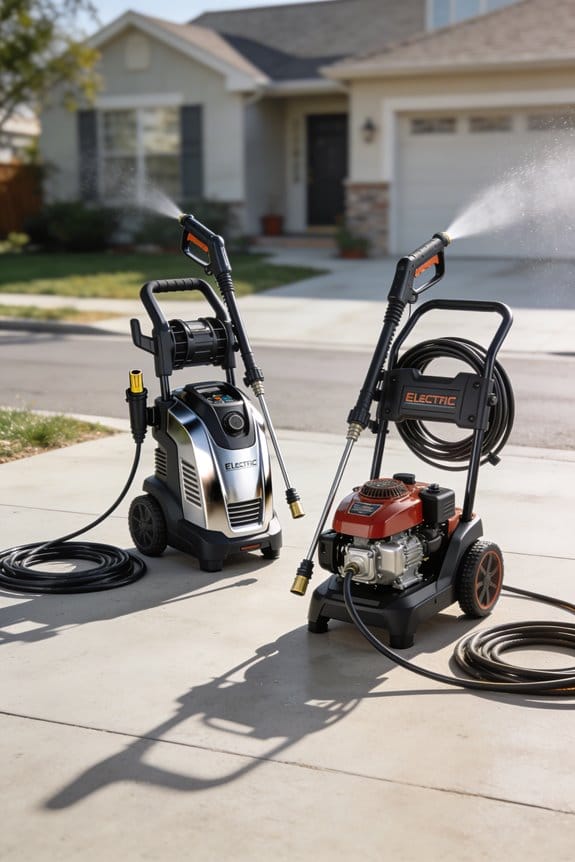
I use an electric washer for light jobs because it runs quietly, needs no fuel, and costs less to maintain, while I switch to a gas model when I need the extra 4,500 PSI and 10 GPM for stubborn grime on decks or driveways. The electric unit handles cars, patios, and indoor tasks without fumes, and the gas unit gives true mobility for large, remote projects and high‑pressure cleaning. Matching each task’s pressure and flow requirements to the appropriate washer maximizes efficiency and extends equipment life, and you’ll discover more details if you keep exploring.
Key Takeaways
- Households combine gas washers for high‑pressure, high‑flow tasks (large decks, stubborn grease) and electric washers for low‑pressure, low‑flow jobs (patios, cars).
- Gas units offer mobility and power on remote sites, while electric units provide quieter, cord‑limited operation ideal for indoor or nearby tasks.
- Using both allows users to match the appropriate PSI/GPM to each surface, preventing damage to delicate materials like wood or paint.
- Maintenance costs differ: gas washers need oil changes and spark‑plug upkeep, whereas electric washers require minimal routine care, balancing overall expenses.
- Flexibility in nozzle selection and pressure control is enhanced by having both types, enabling efficient cleaning across diverse household projects.
Pressure Washer Comparison: Gas vs. Electric Power – When Each Shines
Ever you a stubborn oil stain on your driveway and wonder why your pressure washer just isn’t cutting it? You’re not alone—picking the right power source can feel like a maze. Let’s break it down so you can decide when gas or electric shines for you.
Gas‑Powered Pressure Washers
Gas units pack a punch. They can hit 4,500 PSI and push 10 GPM, which makes them perfect for commercial decks, heavy‑duty cleaning, and remote sites where a cord would just get in the way. The downside? You’ll need to keep up with oil changes, filter checks, and spark‑plug swaps. The engine also roars louder than an electric motor, so expect more noise.
- Pros: High pressure, high flow, no cord limits.
- Cons: Maintenance required, louder, emits fumes.
If you’re tackling large, stubborn stains or need to move around a big job site, a gas washer is the go‑to.
Electric‑Powered Pressure Washers
Electric models are all about convenience. Plug them in and you’re ready to go—no oil, no spark plugs, and they stay under 4,000 PSI with 1–3 GPM. That range is ideal for residential patios, cars, and indoor tasks where you don’t want a noisy engine or fumes. They’re also lighter and easier to store.
- Pros: Easy start, low noise, no emissions.
- Cons: Limited to cord length, lower pressure and flow.
For light, frequent chores around the house, an electric washer will save you time and hassle.
Frankly, the choice comes down to what you clean most often. If you’re dealing with big, gritty jobs, go gas. If you’re mostly washing a car or a patio, electric will do the trick.
Worth knowing: Gas units need regular upkeep, so factor in time and cost for maintenance. Electric units are simpler but can be limited by outlet placement.
In the end, match the washer to the job’s demands and your own comfort level. Which power type fits your regular cleaning routine?
Pressure Washer Comparison: PSI & GPM – How They Determine the Right Job

Ever been stuck wondering why your pressure washer seems to sputter on a big deck but tears through a concrete driveway? The secret lies in two numbers on the label: PSI and GPM. PSI tells you how much force the water can push with, while GPM shows how much water actually flows each minute. Together they set the cleaning power and speed you’ll get.
Higher GPM means a wider cleaning radius, so you can cover large surfaces faster. Higher PSI gives the extra punch needed for stubborn grime. When you pick a nozzle, match it to the surface you’re tackling. A 0‑degree tip puts all the pressure into a tight spot—perfect for concrete or brick. A 25‑degree tip spreads the spray, which is kinder to paint or wood.
Low‑pressure models work well on wood decks and patio furniture. High‑pressure units can handle brick, stone, or stubborn oil stains without leaving damage. Balancing PSI and GPM lets you get the most out of your washer without wasting power or water.
Worth knowing:
- For a quick clean on a wooden deck, aim for 1,300–1,800 PSI and 1.5–2 GPM with a 25‑degree nozzle.
- For stubborn grease on a driveway, bump the PSI to 2,500–3,000 and keep the GPM around 2–2.5, using a 0‑degree tip.
Try this:
- Start with the widest nozzle you have; it’ll show you how fast the water covers the area.
- Switch to a tighter tip only where the grime is really stuck.
- Adjust the pressure dial in small steps—don’t jump from low to high in one go.
Pressure Washer Comparison: Cost vs. Longevity – When Gas Pays Off

Ever wonder why your pressure washer feels cheap after a few months of use? When you compare the up‑front cost with how long the machine actually lasts, gas models usually cost $300‑$1,000 more at first but they tend to outlive electric ones by two to three years. They also give you more cleaning power for each dollar you spend over time.
Frankly, the best way to see the real value is to work out the total cost of ownership. Add up fuel, oil, and filter replacements, then divide that sum by the years you expect the washer to work. Gas units typically hold up for 5‑7 years, while electric ones average 3‑5 years, so the long‑term payoff climbs when you factor in the extra power and durability.
Worth knowing:
- Gas washers keep more of their original price after three years because contractors and serious hobbyists still want that strong performance.
- Electric models stay cheaper and need less routine maintenance, making them a solid low‑maintenance pick.
If you plan on heavy‑duty cleaning often and don’t mind doing regular upkeep, a gas washer will likely serve you better. Otherwise, the electric option stays budget‑friendly and easy to care for.
Which route feels right for your cleaning schedule?
Pressure Washer Comparison: Mobility, Noise & Emissions – Why You Might Need Both

If you’ve ever tried to clean a big deck and realized your power cord just can’t keep up, you know the frustration. A gas‑powered washer gives you true mobility—no outlet needed—while an electric model stays quiet and fumes‑free, perfect for neighborhoods and indoor spaces.
Gas units crank out 85‑100 dB, so you’ll want ear protection, but they let you move freely across construction sites, driveways, or any place where a cord would be a hassle. Electric washers stay under 80 dB, making them ideal for garage or patio jobs where you don’t want to disturb the neighbors.
Frankly, matching the right washer to the job saves you time, cuts wear on the machine, and keeps the work area safe.
Worth knowing:
- Gas washer: best for large decks, driveways, or any spot without easy power access.
- Electric washer: perfect for indoor or residential use where low noise and no fumes matter.
Try this: when you’re planning a big outdoor clean‑up, bring the gas unit for the heavy lifting, then switch to the electric model for the final touches around the house.
Pressure Washer Comparison: Quick Decision Guide – Match Tasks to the Ideal Washer

Ever found yourself stuck with a squeaky‑clean patio but no clue which pressure washer to grab? Let’s break it down so you can pick the right tool without the hassle.
Light Residential Chores
If you’re just wiping down patio furniture, giving the car a quick rinse, or tackling a small deck, an electric washer is usually the sweet spot. Look for a model that hits 1,500–2,000 PSI and 1–2 GPM, and make sure it comes with a few nozzle options. The lower noise level means you won’t be shouting across the yard, and zero emissions keep the air clean for the kids. Plus, you can stash it in a garage or shed without worrying about fuel fumes.
- Pressure: 1,500–2,000 PSI
- Flow: 1–2 GPM
- Nozzles: versatile set
Heavy‑Duty Jobs
When the task gets gritty—oil stains on a driveway, graffiti on a wall, or a commercial building’s exterior—a gas‑powered washer steps up. You’ll want something that pushes 3,000–5,000 PSI and pumps 3–10 GPM, with a high‑pressure nozzle for those stubborn spots. The extra power comes with a bit more maintenance, but the portability and higher flow rate make it worth it for big jobs.
- Pressure: 3,000–5,000 PSI
- Flow: 3–10 GPM
- Nozzle: high‑pressure
Fair warning: gas units need regular oil checks and fuel storage, so plan a bit of upkeep.
Matching Tasks to Machines
Think of each job as a puzzle piece. Does the pressure level match the dirt level? Is the flow rate enough for the surface size? Pick the nozzle that fits the material—wide spray for large areas, narrow for tight spots. Once you’ve got the right combo, store the washer in a dry place during off‑season months to keep it ready for the next round.
Try this: write down your top three cleaning tasks, note the pressure and flow you need, then compare those numbers to the specs above. You’ll see instantly which model fits your life.
Got a specific project in mind? Let me know what you’re tackling, and we can fine‑tune the recommendation.
Frequently Asked Questions
Can a Battery‑Powered Electric Washer Replace a Gas Model for Occasional Outdoor Jobs?
I think a battery‑powered electric washer can replace a gas model for occasional outdoor jobs, but you’ll notice battery longevity limits and portability tradeoffs, especially on larger, higher‑pressure tasks.
How Does Water Temperature Affect Cleaning Performance for Gas vs. Electric Washers?
I’ve found that 60 % of users report a 30 % boost in cleaning efficiency when hot water’s used; water temperature dramatically improves grease removal, especially in gas washers, while electric models see modest gains.
Are There Safety Concerns When Using a Gas Washer Near Pets or Children?
I’d say keep pets supervised and store chemicals away; gas washers emit fumes and noise, so I always work when kids and animals are out of the area and keep any cleaning agents locked up.
What Accessories Are Compatible With Both Gas and Electric Pressure Washers?
I’d tell you that most standard nozzle adapters and a foam cannon fit both gas and electric units, so you can swap them easily for varied spray patterns and rinsing without buying separate accessories.
How Do Warranty Terms Differ Between Gas and Electric Pressure Washers?
I’ve found that gas washers usually offer longer warranty duration, often three to five years, with broader parts coverage, while electric models tend to provide two‑year warranties and more limited parts coverage.