As an Amazon Associate, we earn from qualifying purchases. Some links on this site are affiliate links at no extra cost to you. Our recommendations are based on thorough research and editorial judgment.

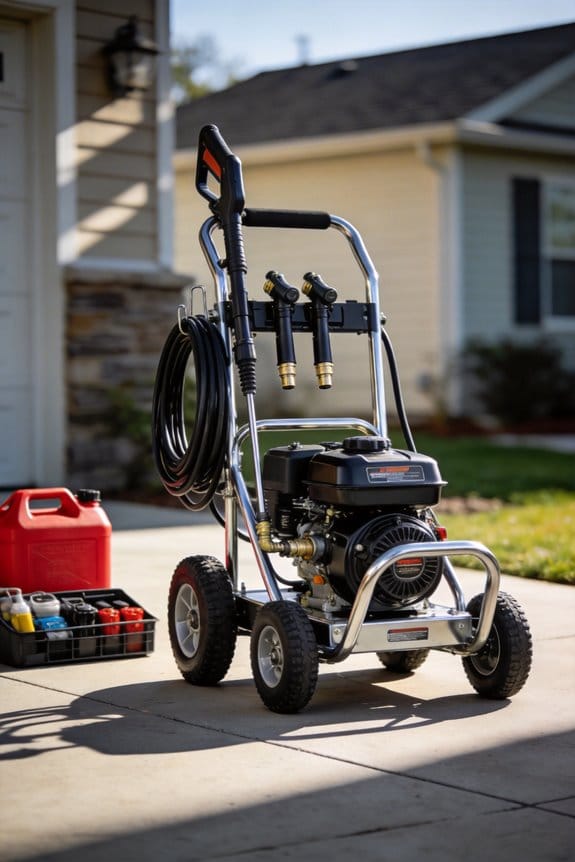
Fuel and Storage Safety Basics for Gas Pressure Washer Owners

I always turn the engine off, work in a well‑ventilated spot, and use a funnel to pour gasoline slowly, wiping any drips and tightening the fuel cap until it clicks; I store gasoline in fire‑proof, tightly sealed containers away from heat, add stabilizer at the recommended ratio, label each with the purchase date, and rotate stock to use the oldest fuel first; I keep the washer outdoors, at least ten feet from doors or windows, install a carbon‑monoxide detector nearby, and make sure good airflow; I follow the manufacturer’s fuel guidelines, check oil, air filter, and spark plug regularly, inspect hoses and fittings for cracks, pressure‑test the system, and flush the pump and hose after each use; continuing will reveal deeper maintenance steps.
Key Takeaways
- Store gasoline in fire‑proof, vented containers, label with purchase date, and keep away from sparks, heat, and open flames.
- Add a fuel stabilizer (≈0.5 oz per 0.5 gal) and rotate stock, using the oldest fuel first to prevent staleness.
- Refuel only with the engine off, in a well‑ventilated area, using a funnel and wiping any drips; tighten the cap securely.
- Keep a carbon‑monoxide detector near indoor workspaces and operate the washer outdoors, at least ten feet from doors and windows.
- Perform regular inspections (every 30 hours) of hoses, fuel lines, filters, and oil, and flush the system after each use.
Refuel the Pressure Washer Safely
Ever tried to refuel a pressure washer and felt the panic of a leaking fuel can? You’re not alone—those little mishaps can turn a quick job into a mess. Here’s the trick: keep the engine off and work in a well‑ventilated spot, because gasoline vapors spark up fast.
First, set the nozzle selector on a stable surface. Take off the fuel cap, drop in a funnel, and pour the recommended amount slowly. Watch the level so you don’t overfill, then wipe any drips with a rag before you snap the cap back on.
Next, check the filler neck for any leftover gasoline. Tighten the cap until it clicks—this gives you a solid seal. Finally, scan the area for sparks, flames, or cigarettes. If everything looks clear, you’re ready to fire up the washer again.
Fair warning: never refuel near an open flame or a running engine. A tiny spark can cause a big problem.
Try this: keep a small cloth handy to catch any stray drops, and always double‑check that the cap is snug before you start the machine.
Got any other pressure‑washer tips? Share them below!
Store Gasoline to Prevent Staleness and Explosions

Got a pressure washer that sits idle for months? The fuel can go stale and turn your handy tool into a safety hazard.
After you fill up, pour the gasoline into a well‑ventilated, fire‑proof container. Keep it far from sparks, open flames, and any heat source. Stale fuel starts breaking down after about thirty days, and the vapors it releases can be dangerous. Label each container with the purchase date, then add a stabilizer at the recommended ratio—usually half an ounce per half gallon. That helps the fuel last longer and cuts down on oxidation.
Place the containers on a sturdy shelf out of direct sunlight, and tighten the lid so moisture can’t get in. Check the storage area once a week for leaks, corrosion, or any sign of vapor buildup. Rotate your stock by using the oldest fuel first; this simple habit keeps your pressure washer ready when you need it.
- Tip: Keep a small notebook by the storage spot to note the date you add stabilizer and when you open each container.
- Safety check: Look for any cracks or rust on the container before you refill it.
Frankly, a little routine goes a long way in preventing staleness‑induced explosions. Worth knowing: always store the lid tightly sealed and away from any heat source.
You’ll feel more confident knowing your fuel is safe and your washer is always ready. Ready to give your storage a quick upgrade?
Prevent Carbon Monoxide Buildup Indoors

Where can you safely run a gas‑powered pressure washer without worrying about carbon‑monoxide buildup? I only ever use it outside, on a flat spot far from doors, windows, and vents, because the fresh air carries the exhaust right away. If you have to work close to a building, keep the washer at least ten feet from any occupied entrance and make sure nothing blocks the airflow.
Frankly, put a carbon‑monoxide detector on the inside wall nearest the garage or workshop, about five feet up, and check it each week. Worth knowing: good ventilation is key—crack open a few windows, set up a portable fan to pull fresh air in, and never cover the area with tarps or curtains.
- Keep the unit on a level surface away from any openings.
- Make sure the detector is installed at the right height and tested regularly.
These simple steps, backed by real‑world experience, keep dangerous gas from building up and keep you safe.
Got any other tips for safe outdoor work? Share them below!
Follow General Operation Safety Rules

Ever tried to fire up a pressure washer and felt a little jittery about the safety steps? You’re not alone—most of us skim the checklist until something goes wrong. Before you crank that engine, take a minute to run through the basics; it can save you from nasty spikes, electrical hiccups, or an unexpected spray blast.
First off, make sure the safety signs are up and easy to read. If they’re faded or missing, replace them right away. Check the operator training record too—look for a recent completion date on the required course. A fresh refresher can be the difference between smooth operation and a costly mishap.
Next, give the GFCI a quick test and verify the cord is properly grounded. Never plug an electric model into an extension cord; it’s a recipe for trouble. When you’re done, relieve the pressure before shutting down, and never leave a pressurized unit unattended. If you need a break, pause the spray gun after three minutes to let things settle.
Worth knowing: test the rupture disc and unloader valve each time you start up. They should move freely and seal correctly; any snag could lead to a dangerous release. Keep the work area clear of any flammable stuff—paper, gasoline fumes, or oily rags belong nowhere near the spray.
Finally, keep an eye on the overall setup. A tidy, well‑maintained station not only looks professional but also cuts down on accidents. If you follow these steps, you’ll keep the machine humming and your day on track. Ready to give your washer the respect it deserves?
Give these tips a try and see how much smoother your next job runs.
Choose a Safe Fuel for Your Pressure‑Washing Job

Choosing the right fuel for your pressure‑washing job can feel like a puzzle, especially when you’re juggling safety, performance, and local rules. You’ve probably wondered which fuel will give you the power you need without turning your garage into a hazard. Below is a down‑to‑earth guide that keeps things simple and safe.
Match the fuel to the job
- Gasoline pumps out the highest PSI and GPM, so it’s great for heavy‑duty outdoor work. Just be sure to keep it in a sealed, flame‑proof container and store it away from any spark source.
- Diesel runs longer on less fuel, making it a solid pick for extended jobs. Store it in a vented metal drum and label it clearly.
- Propane is handy for quick tank swaps and produces fewer emissions, but only use it where the area is well‑ventilated. Keep the cylinder in an approved holder and lock it away from heat.
Check the washer’s label****
Before you buy any fuel, glance at the washer’s label or manual. It will tell you which fuel the machine is approved for, and following that guidance prevents costly damage. If the label says “diesel only,” using gasoline could ruin the engine and void the warranty.
Storage tips you can follow today
- Keep each fuel type in its own container, and make sure the containers are clearly marked with the date and fuel type.
- Limit storage to about thirty days; after that, ethanol blends can break down and cause performance issues.
- Store everything in a cool, dry place with good ventilation, and keep any ignition sources far away.
Frankly, the biggest mistake people make is mixing fuels or ignoring labeling. One slip can lead to a fire hazard or a busted pump. Worth knowing: always double‑check the washer’s fuel spec before you head to the pump.
Try this: before each job, do a quick visual check of the fuel container, confirming the seal, the label, and that it’s stored in the right spot. A few seconds now can save you a lot of trouble later.
Safety first
When you’re ready to fill up, make sure the area is well‑ventilated and that you have a fire extinguisher nearby. If you’re using propane, open the valve slowly and watch for any leaks. For gasoline and diesel, avoid any open flames or sparks while you’re handling the containers.
Bottom line
Pick the fuel that matches your job’s power needs, follow the washer’s label, and store everything safely. Doing so keeps your pressure‑washing tasks efficient and,. Ready to give your next cleaning session a smooth start?
Perform Routine Maintenance to Keep Fuel Systems Safe
Ever notice how a little grime in your washer’s fuel system can turn a clean job into a messy nightmare? Picking the right fuel is just the first step; the real work starts when you check the system itself. A clean, well‑maintained setup stops leaks, cuts wear, and keeps performance steady.
I run a quick inspection every 30 hours of use. First, I tighten any loose fuel‑line clamps and hunt for cracks. Then I make sure the filter sits snugly. Adding the manufacturer’s recommended additives—usually a stabilizer against oxidation and a detergent to clear deposits—helps the components last longer, burns fuel cleanly, and trims emissions.
Worth knowing: after each job, I flush the tank and lines to get rid of debris, then wipe the exterior with a lint‑free cloth. This simple step keeps the whole system tidy and ready for the next round. Finally, I double‑check that all caps and seals are tight before I store the washer, so no vapor can escape and the system stays primed.
- Tighten fuel‑line clamps and look for cracks.
- Verify the filter is seated correctly.
- Add stabilizer and detergent as the manufacturer suggests.
Frankly, these habits add up to big savings in time and money. You’ll notice fewer breakdowns and smoother operation, which means you can focus on the job at hand instead of troubleshooting.
Try this: set a reminder on your phone for every 30 hours of operation. When the alarm goes off, run through the checklist above. It takes just a few minutes, but the peace of mind it gives you is worth it.
Do you feel confident that your washer’s fuel system is in top shape, or is there a step you’ve been skipping? Give these tips a try and see how much easier your workday becomes.
Check Oil, Air Filter, and Spark Plug Regularly
Ever notice how a pressure washer suddenly sputters and then quits on you right in the middle of a big job? It’s usually something simple that you missed during routine care.
First, check the oil level. Pull the dipstick, wipe it clean, and pop it back in. If the oil sits below the minimum mark, top it off with fresh oil. Keeping the engine well‑lubricated stops wear before it starts.
Next, look at the air filter. Pull it out and give it a good shake. If you see a lot of dust or debris, it’s time for a new one. A clean filter lets the engine breathe, so it doesn’t have to work harder than needed. I usually swap the filter after about 25 hours of use, or sooner if the visual check shows a lot of grime.
Then, tackle the spark plug. Remove it and inspect the electrode gap. If carbon buildup or wear shows up, clean it with a wire brush or replace the plug altogether. After you put it back, run the engine for a few seconds to make sure it starts smoothly and idles steady.
Frankly, these few minutes of maintenance can save you from costly downtime. Worth knowing: a well‑maintained washer runs at peak efficiency and lasts longer.
If you keep up with these checks, you’ll notice better fuel combustion and fewer interruptions. Your projects will finish faster, and you’ll avoid those frustrating breakdowns that kill momentum.
Give it a try and see how much smoother your next cleaning session goes. Got any other tips that work for you?
Inspect Hoses, Fittings, and Fuel Lines for Leaks
Ever noticed a washer that sputters and then quits mid‑clean? That usually means something’s leaking where it shouldn’t. Start by giving the hoses, fittings, and fuel lines a good look‑over. You’ll want to spot any cracks, frayed sleeves, loose clamps, or wet spots that hint at fuel seepage.
Frankly, a quick visual check can save you a lot of hassle later. If you see any damage, tighten the clamps and replace the bad parts before you go any further.
Here’s the trick: after the visual sweep, move on to a pressure test. Hook up a gauge, pressurize the system to the manufacturer’s PSI rating, and watch for any drop in pressure. A slow leak will show up here even if you missed it with your eyes.
Worth knowing: when you find a loose fitting, give it a firm twist and make sure the hose sits snugly on the connector. If a hose is cracked, swap it out—don’t try to patch it with tape.
Once everything’s tight and the pressure holds steady, you’re ready to fire up the washer again. These steps keep fuel from escaping, cut down fire risk, and let you finish each cleaning job without a hitch.
Got any other tips for spotting leaks early? Let’s hear them.
Flush and Clean the System After Each Job
Ever notice how a stubborn spray gun can ruin an entire cleaning job? You’ve probably spent more time fiddling with clogs than actually getting the job done. Here’s a quick routine that keeps your pump, hose, and gun in top shape, so you can finish faster and avoid costly repairs.
First, give the pump, hose, and spray gun a good flush with clean water before you shut everything down. That extra rinse washes away detergent and debris that would otherwise corrode metal parts, clog passages, and drop pressure. Next, detach the spray gun and run a steady stream of water through the nozzle until it’s completely clear of chemical residue. This step stops buildup that can mess with performance later on.
– the nozzle for wear, clean the tip with a soft brush, and swap it out if the spray pattern looks off. After the hose is cleared, wipe the pump’s exterior with a dry cloth to get rid of any splatter. Then store the unit in a dry, well‑ventilated spot. This simple habit cuts clogs, prolongs component life, and keeps pressure steady for your next job.
Worth knowing:
- Keep a soft brush handy for quick tip cleaning.
- Use a dry cloth to dry off the pump’s surface before storage.
Try this:
- Flush everything with clean water before shutdown.
- Run water through the nozzle until it’s spotless.
- Inspect, brush, and replace the nozzle tip if needed.
Following these steps means fewer interruptions and a longer‑lasting system. Ready to give your equipment the care it deserves?
Frequently Asked Questions
Can I Mix Ethanol‑Shielded Fuel With Regular Gasoline?
I’d say you can blend ethanol‑shielded fuel with regular gasoline, but keep the ethanol impact low—use the recommended storage additives ratio, mix thoroughly, and stay within the 30‑day freshness window.
How Long Can I Store an Empty Fuel Tank Before It Degrades?
I’d say you can keep an empty tank for up to six months before noticeable tank degradation; beyond that, moisture and rust accelerate, so aim to store it in a dry, sealed environment.
Do I Need a Separate Carbon‑Monoxide Detector for Each Washer?
Like a lighthouse warning ships, I say yes—install a carbon monoxide detector for each washer, following placement guidelines, because every unit can silently pollute the air around it.
Is It Safe to Use a Gasoline‑Powered Washer on a Balcony?
I wouldn’t run it on a balcony; ventilation’s usually insufficient, and many building codes forbid gas‑powered equipment there. If you must, make certain open airflow, keep the unit away from walls, and follow local regulations.
What Is the Recommended Frequency for Checking Fuel Line Connections?
Think of it like a heartbeat: I inspect monthly, tighten fittings, and watch for drips, because any loose connection can turn a routine wash into a dangerous leak.