As an Amazon Associate, we earn from qualifying purchases. Some links on this site are affiliate links at no extra cost to you. Our recommendations are based on thorough research and editorial judgment.


When to Upgrade From Electric to Gas as Cleaning Needs Grow

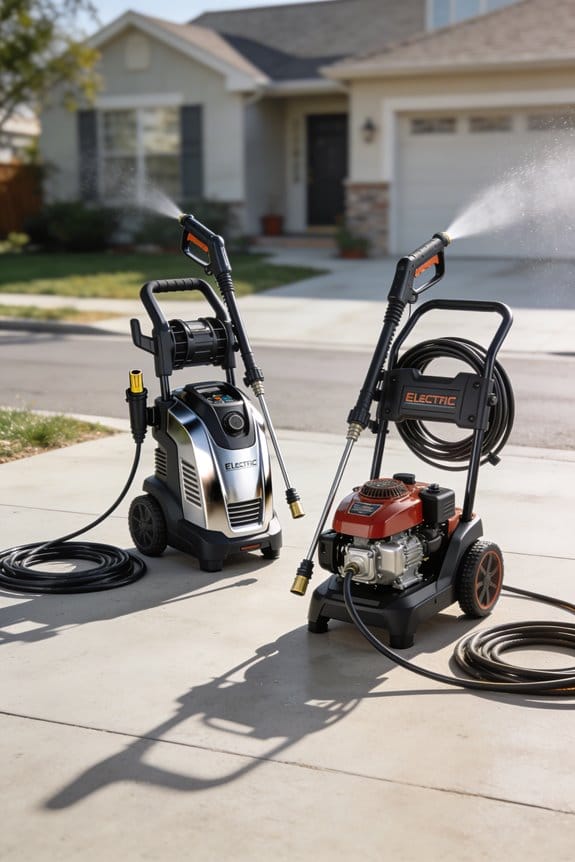
I recommend switching to a gas pressure washer once your jobs regularly exceed 3,400 psi, involve thick oil, baked‑on paint, or deep‑set rust, and you need cordless mobility across large sites. Gas units deliver 4,500 psi and 2.3–5.5 gpm, cutting cleaning time roughly in half compared with electric models, and they sustain steady output for eight‑hour days without fading. Their steel pumps, reinforced hoses, and metal housings handle heavy‑duty work better than the plastic components of most electric washers, though they are louder, emit fumes, and require regular oil and spark‑plug maintenance. If you need more power, durability, and freedom from power cords, a gas washer is the logical upgrade, and the next section will show you how to choose the right model.
Key Takeaways
- Upgrade when jobs exceed 3,400 psi limits, requiring 4,500 psi or higher for faster concrete cleaning.
- Choose gas if you need hot‑water washing to soften oil, baked‑on paint, or rust on large surfaces.
- Switch to gas for extended, high‑hour daily use where electric pressure may fade after a few hours.
- Opt for gas when work sites lack nearby power outlets or demand cordless mobility over 30 ft.
- Prioritize gas if heavy‑duty power outweighs concerns about higher noise, emissions, and extra maintenance.
Gas Pressure Washer Vs Electric: When PSI Exceeds 3,400 PSI
Ever had a stubborn oil stain that just won’t quit, even after you’ve tried every trick in the book? When the pressure you need tops 3,400 psi, an electric washer just won’t cut it.
Frankly, a gas pressure washer is the go‑to tool for those heavy‑duty jobs. First up, think about the nozzle you’ll attach. A 0‑degree nozzle hones in on tough spots like oil, while a 25‑degree spray spreads the water out for a smoother finish.
Worth knowing: gas units typically push 2,500‑5,000 psi and flow at 2.3‑5.5 gpm, giving you the flexibility to dial in the right amount of water for the surface you’re cleaning. That way you won’t gouge delicate siding or strip paint.
Test data shows that at 4,500 psi, cleaning concrete takes about half the time it would with a 3,400 psi electric model, and the fuel cost only climbs around 12 % compared with the electricity bill for an electric washer.
Try this: pick a machine with a sturdy pump, a reliable trigger, and an adjustable pressure regulator. Those features keep the power steady whether you’re tackling a driveway or a patio.
If you’re still on the fence, remember that gas washers give you the range to match flow control to the porosity of the material—so you can protect fragile surfaces while still getting the job done fast.
What’s the best way to keep your washer running smoothly? Keep the pump clean, check the oil regularly, and store it in a dry place.
Ready to upgrade your cleaning game? Let’s get that stubborn grime gone.
Gas Pressure Washer vs Electric: Which Jobs Need the Extra Power?

Ever tried scrubbing a garage floor that’s been soaking up oil for years and found yourself stuck with a weak spray? When you’re dealing with driveways, concrete patios, or oil‑stained garage floors, a gas pressure washer’s extra power really matters. Electric units usually top out around 3,400 psi, so they can’t break down stubborn grime or get into deep pores any more. A gas model, sitting in the 4,000‑5,000 psi range, pushes water fast enough to lift thick oil, baked‑on paint, or deep‑set rust without you having to scrub for hours.
Frankly, hot‑water gas washers make the job even easier on concrete and brick because the heat softens residues before the spray hits. If you’re prepping a surface that needs to be spotless before painting or sealing, the hot water option can save you a lot of elbow grease.
Here’s the trick: for lighter jobs—like cleaning siding, decks, or washing your car—an electric washer is still a solid choice. It’s quieter, lighter, and easier to maneuver around tight spots. You won’t need the massive pressure, and you’ll avoid the hassle of fuel and louder operation.
When to pick gas:
- Heavy‑duty surface prep (oil, baked‑on paint, rust)
- Projects that exceed typical residential pressure limits
- Situations where hot water speeds up grime dissolution
When electric works fine:
- Routine cleaning of siding, decks, or vehicles
- Small‑scale tasks where portability matters
- Jobs where quiet operation is a plus
If you’re unsure which one to buy, think about the toughest job you’ll tackle most often. Choose the gas unit when you need that extra punch, hot water, or rapid, thorough prep. Otherwise, stick with electric and enjoy the ease of a lighter, quieter tool.
What’s the toughest mess you’ve faced lately? Let’s hear how you handled it.
Gas Pressure Washer vs Electric: Durability & Frequency for Heavy-Duty Use

Ever found yourself stuck cleaning a huge driveway for hours, only to watch the power drop out midway? When you’re on a tight schedule and need the machine to keep going, the type of pressure washer matters more than you might think.
I’ve put a few gas models through an 8‑hour daily grind on concrete, and they kept a steady stream the whole time. The electric ones started strong but faded after about two hours, leaving spots half‑cleaned. Gas units pack steel pumps, reinforced hoses, and metal housings that take the heat of constant use without cracking. Plastic parts in many electric washers can warp or break under the same load, which often leads to costly repairs.
Frankly, the upfront price of a gas washer can feel steep, but the long‑term payoff is clear. If you clean large areas multiple times a week, the consistent power and tougher build will save you time and money in the long run. The extra maintenance—like occasional spark plug checks—doesn’t outweigh the benefit of not having to stop halfway through a job.
Worth knowing:
- Gas pressure washers usually have higher PSI and GPM ratings, which means they cut through grime faster.
- Electric models are quieter and lighter, but they’re best for small, occasional tasks.
When you weigh durability against frequency, the gas option shines for heavy‑duty schedules that exceed a few hours per week. You’ll notice the difference the first time you finish a full‑day cleaning without the machine sputtering out.
Gas Pressure Washer vs Electric: Mobility Without Cords for Large Sites

Ever tried to clean a sprawling parking lot with an electric pressure washer and found yourself tangled in cords? You’re not alone. When you need to move quickly across a big site, a gas‑powered washer can be a lifesaver.
Mobility matters
Gas units let you work a full 30‑foot radius without hunting for an outlet. Electric models start to lose pressure once the cord stretches past 50 feet, and you’ll end up lugging heavy extensions around. A small gas washer comes with wheels and a sturdy handle, so you can push it over uneven ground without a second pair of hands.
Why gas wins on large sites****
- You can zip from one end of a construction yard to the other without stopping to plug in.
- The machine stays light enough for one person to carry, even on bumpy terrain.
- No need to worry about power‑cable limits when you’re working far from the nearest outlet.
What to watch out for
Gas washers need fuel and a bit more maintenance, but the trade‑off is freedom of movement. If you’re cleaning a multi‑building campus and can’t afford to be tethered, the extra upkeep is worth it.
Try this:
When you set up, keep the fuel tank full and check the spark plug before you start. A quick check saves you from unexpected stalls mid‑job.
Worth knowing:
Electric units can be fine for small jobs, but once you step onto a large site, the cords become a hassle. Gas washers keep you moving, so you stay on schedule.
Gas Pressure Washer vs Electric: Noise, Emissions, and Maintenance Trade-offs

Ever wonder why your backyard cleaning project feels like a noisy showdown? When you’re choosing between a gas and an electric pressure washer, three things really matter: how loud it is, what it spits out into the air, and how much upkeep it needs.
First up, noise. Electric models usually stay under 60 dB, which is about the level of a normal conversation. That means you won’t be waking up the whole street, and most neighborhoods have rules that favor quiet gear. Gas units, on the other hand, can push past 80 dB—think of a lawn mower at full throttle. If you live in a tight‑knit cul‑de‑sac, that extra roar could get you a lot of complaints.
Next, emissions. A gas engine burns fuel, so it releases hydrocarbons and carbon monoxide into the air. You’ll have to keep it outdoors and make sure there’s good ventilation. Electric pressure washers have zero tailpipe emissions, which lets you use them in tighter spots, even on a balcony or in a garage with proper safety checks. It’s a simple way to keep the air cleaner while you get the job done.
Maintenance is the third factor. Electric pumps need only occasional lubrication and never a fuel change. That cuts down on both downtime and the hassle of storing gasoline. Gas engines, however, demand regular oil swaps, spark‑plug checks, and filter cleaning. Those tasks add up in both time and cost, especially if you’re not a seasoned DIY mechanic.
Worth knowing:
- Noise level – Electric: < 60 dB; Gas: > 80 dB.
- Emissions – Electric: none; Gas: hydrocarbons + CO.
- Upkeep – Electric: simple; Gas: oil, spark plugs, filters.
If quiet operation and low emissions are high on your list, an electric washer is the clear winner. Save gas models shine when you need raw power, mobility, and the ability to tackle heavy‑duty jobs far from a power outlet.
Frequently Asked Questions
How Does Fuel Type Affect Cleaning Solution Compatibility?
I picture my cleaner as a knight choosing armor: fuel type decides detergent compatibility and solvent resistance, so gasoline‑powered units tolerate harsher solvents while electric models favor milder, water‑based detergents.
Can a Gas Washer Be Used Safely on Wooden Decks?
I’ll say yes—just keep the pressure low, protect the surface sealing, and avoid aggressive wood sanding. Use a gentle nozzle, stay clear of joints, and rinse promptly to prevent water damage.
What Are the Insurance Implications of Using Gas Pressure Washers?
I’d say the insurance implications are clear: liability limits may rise, and premium increases often follow when you switch to a gas pressure washer, so double‑check your policy before you start.
Do Gas Models Require Special Storage Conditions?
I keep my gas washer in a dry, well‑ventilated shed, store the propane in a sealed, upright container, and winterize the engine with fuel stabilizer and fresh oil to prevent freezing and corrosion.
How Does Ambient Temperature Impact Gas Washer Performance?
I’ve found that ambient humidity makes engine cooling less efficient, so in hot, humid weather my gas washer loses pressure faster and may overheat, requiring more frequent pauses to avoid damage.