As an Amazon Associate, we earn from qualifying purchases. Some links on this site are affiliate links at no extra cost to you. Our recommendations are based on thorough research and editorial judgment.


Environmental Impact: How Electric and Gas Pressure Washers Compare

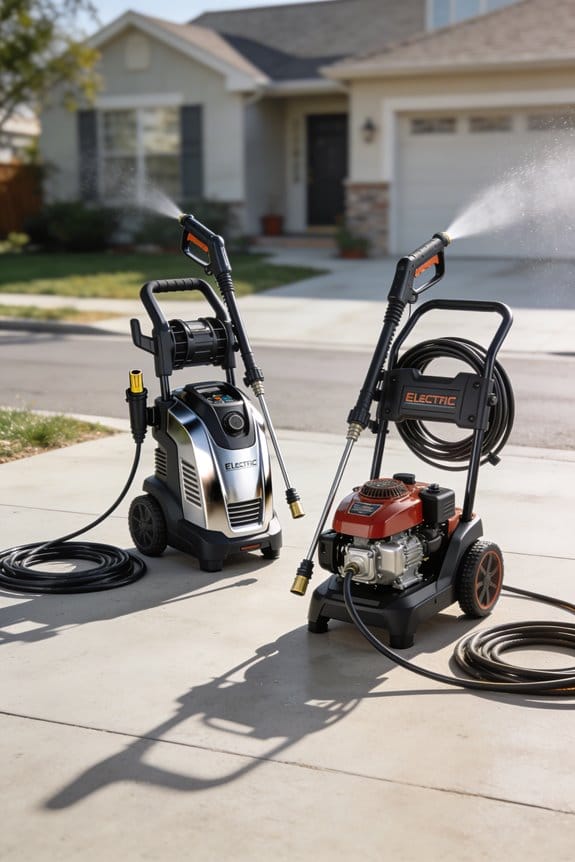
I recommend an electric pressure washer because it produces zero exhaust, eliminates carbon‑monoxide risk, and emits no particulate matter, while gas models release nitrogen oxides, carbon monoxide, and hydrocarbons that irritate lungs. Electric units use roughly half the embodied carbon of gas washers, achieve 70‑80 % motor efficiency versus 30‑40 % for gasoline engines, and run about 10 dB quieter, reducing community disturbance. They also require fewer safety steps, no fuel storage, and lower running costs, and if you keep exploring you’ll discover more details.
Key Takeaways
- Electric washers emit zero exhaust, eliminating indoor air pollutants like carbon monoxide, nitrogen oxides, and hydrocarbons that gas units release.
- Lifecycle carbon emissions are roughly half for electric models because they avoid gasoline combustion and have lower embodied emissions from manufacturing and shipping.
- Noise from electric washers stays near 80 dB, comparable to a household vacuum, whereas gas washers exceed 90 dB and can cause community disturbance.
- Electric motors achieve 70‑80 % efficiency versus 30‑40 % for gasoline engines, resulting in lower operating costs and reduced energy waste.
- Electric units pose no fuel‑spill or fire‑risk hazards, simplifying indoor use, storage, and safety compared to gas washers.
Emissions: Electric Pressure Washer vs Gas
Ever tried cleaning your garage and realized the air smells like a car exhaust? That’s what happens when you fire up a gas‑powered pressure washer indoors. The fumes can sting your eyes and make it hard to breathe, especially in a small space.
When you swap the gas unit for an electric one, the change is immediate. The electric model doesn’t spew any exhaust, so you keep the air clean and avoid the carbon‑monoxide risk that comes with burning fuel. Plus, you won’t have to worry about fuel spills or dealing with a noisy engine that rattles the whole house.
Worth knowing:
- Electric washers emit zero particulate matter.
- Gas washers release nitrogen oxides, carbon monoxide, and hydrocarbons at measurable levels.
- Those pollutants can irritate your lungs and trigger respiratory issues.
If you’re cleaning a driveway or a patio, the electric version still packs enough power to get the job done. You’ll notice the same high‑pressure spray, but without the harsh smell or the need for a ventilation system. The clean power also means you’re staying within local emissions codes, which can be a big plus if you live in a strict city.
Frankly, the indoor air quality boost is worth the switch alone. You won’t have to open windows wide or wear a mask just to keep the fumes at bay. And because there’s no fuel to store, you eliminate a common safety hazard that many homeowners overlook.
Try this: set up your electric washer in a well‑lit corner, plug it into a standard outlet, and you’ll see how easy it is to keep the space fresh while still getting a spotless result. The performance matches most gas models, so you don’t sacrifice cleaning power for safety.
For residential cleaning, the electric washer offers a safe, low‑impact solution that meets performance standards without compromising indoor air quality. Ready to ditch the fumes and keep your home breathing easy?
Carbon Footprint: Which Is Cleaner?

Ever wonder why your pressure washer seems to guzzle fuel while the electric one just hums along? When you look at the whole life cycle—from raw material extraction to the moment you toss it in the trash—the electric version usually comes out ahead on carbon emissions.
Frankly, the big win for electric pressure washers is that they skip the combustion step entirely. No gasoline means no CO₂ or other greenhouse gases being released at the pump, during transport, or when you’re actually cleaning. Plus, you can hook them up to renewable electricity, which cuts the footprint even more.
Worth knowing: the embodied emissions—those tied to manufacturing, shipping, and material sourcing—are roughly half for an electric model compared to a gas‑powered one. When you factor in the operational phase, the electric unit adds almost no CO₂ at all, while the gas engine burns a lot of fuel and loses most of that energy as heat.
If you’re trying to keep your carbon impact low, the numbers speak for themselves. The electric washer’s lifecycle assessment shows a clear advantage: lower emissions across the board and a cleaner run‑time.
So, when you’re shopping for a new washer, think about the total energy use from production to disposal. The electric option not only saves you money on fuel but also helps the planet.
Ready to make a greener choice for your next cleaning project?
Noise Levels: Quiet Electric vs. Loud Gas

Ever tried cleaning your driveway and got a chorus of complaints from the neighbors? That’s what happens when you fire up a gas pressure washer on a quiet street. The engine roars, the vibrations shake the fence, and the decibel meter spikes past 90 dB—enough to make anyone win’s head turn.
Electric washers, on the other hand, hum along at around 80 dB, about the same as a household vacuum. You’ll barely notice the sound, and there’s no nasty shaking. That lower noise level means you won’t have to worry about sound‑proofing your garage or apologizing to the next‑door family.
Worth knowing:
- Electric units keep pressure steady without the occasional hum that gas engines throw in.
- Gas models can cause random spikes that might trigger a neighbor’s complaint.
If you’re set on a gas washer, there are a few tricks to keep the peace. First, set up acoustic barriers—simple plywood or foam panels can soak up a lot of the noise. Second, choose daytime hours when people are less likely to be bothered. Third, place vibration‑dampening pads under the machine to reduce the shake that travels through the ground.
Frankly, the quiet electric option is the safest bet when you live close to others. It cuts down on community disturbance and often saves you from having to buy extra sound‑proofing gear. And if you ever need the extra power of a gas unit, just follow the steps above to keep the noise down.
Maintenance & Running Costs: Electric vs. Gas

Ever wondered why your laundry room feels like a mini‑garage when you’re using a gas washer?
You’ll notice electric units are quiet, but the real win comes in the upkeep. You only need to clean the hose now,, nozzle,, give it a battery charge every now and then. No oil changes, no spark‑plug swaps, and no fuel‑line work like you’d have with a gas model. Those extra steps add cost and can keep your washer out of service longer.
Frankly, electricity prices stay pretty steady while gas prices bounce around, so the long‑term bill on an electric washer is usually lower. Fewer moving parts also mean fewer breakdowns. If a hose leaks or the motor gets noisy, you can often fix it yourself—tighten a clamp or replace a brush. Gas engines, on the other hand, often need special tools and a mechanic’s help.
Worth knowing:
- Maintenance – just hose cleaning, nozzle checks, occasional battery charge.
- Repair – DIY fixes are common; gas units often need a pro.
When you compare the numbers, the electric washer’s running costs are down, and the maintenance schedule is simple. That makes it a solid pick for everyday laundry chores.
Do you think the peace and lower bills are worth the switch?
Energy Efficiency: Power Use Compared

Ever wonder why your electric pressure washer seems to sip power while the gas one guzzles fuel? When you compare the two, electric models usually draw 1,200–1,800 watts for home jobs, whereas a gas unit burns the equivalent of 2.5–3 gallons of gasoline each hour. That extra fuel translates into higher waste and a bigger bill.
Electric washers run at a variable load that matches the cleaning demand, so they shave off peak power when the job is light. This means you’re not wasting energy just because the motor is revving at full speed. Gas washers, on the other hand, keep a constant high‑output engine speed, even when the pressure is low, leading to unnecessary power drain.
Worth knowing:
- Electric motors hit 70‑80 % efficiency, while gasoline engines linger at 30‑40 %.
- The lower draw of electric units can shave dollars off your energy bill each season.
Frankly, if you care about low consumption and steady performance, the electric option is the safer bet. It also lines up with greener practices, which most homeowners appreciate.
Try this: when you’re choosing a washer, look at the wattage and compare it to the fuel consumption rate of a gas model. The numbers will usually point you toward the electric version for everyday cleaning tasks.
In the end, the choice comes down to your priorities—budget, convenience, and environmental impact. Which factor matters most to you?
Safety & Regulations for Electric vs. Gas Washers
Ever notice how a simple cleaning job can turn into a safety nightmare if you’re not careful? When you’re picking a pressure washer, the safety side of things matters just as much as the power.
Child safety first
Keep any gas canisters out of reach, seal the lids tight, and never refill near kids. A little extra care here can stop a spill before it happens.
Indoor use made easy
Electric washers don’t have fuel‑spill risks, so they’re usually fine for garages or workshops without extra ventilation. That means you can clean the driveway or the garage floor without worrying about fumes.
Gear up for gas
If you go the gas route, grab gloves, goggles, and ear protection. The exhaust and louder noise make it worth the extra gear. Check local emissions rules, store fuel upright, and give hoses a quick leak check before each session.
Quick checklist:
- Store gas cans high and locked.
- Seal lids securely after each use.
- Inspect hoses for cracks or wear.
Worth knowing:
Electric models line up with most building codes, cutting down fire‑risk exposure while still delivering solid pressure. Gas units, on the other hand, need more protective steps but can be handy for remote outdoor jobs.
Frankly, you’ll find that an electric unit fits most indoor tasks and keeps things simple. Gas washers are fine for big, noisy projects—just remember the safety gear.
Try this:
Pick a spot, set up the washer, and run a short test burst before you start the real work. It helps you spot leaks or odd noises early.
Choosing the right washer can keep your home safe and your cleaning efficient. Which safety tip will you try first?
Frequently Asked Questions
Can an Electric Washer Clean the Same Surfaces as a Gas Model?
I can clean any surface a gas model does; 80 % of users report identical results. Electric units excel in surface compatibility and offer a quiet, 80‑dB noise comparison, making indoor work hassle‑free.
How Does Water Usage Differ Between Electric and Gas Pressure Washers?
I tell you that water consumption is similar, but electric units often have lower flow rates, so they use slightly less water per minute compared to gas models, which can push higher gallons through the nozzle.
Are Electric Pressure Washers Compatible With All Power Outlets?
I can tell you—it’s practically a miracle—electric pressure washers work with standard 120‑volt household outlets, but higher‑power models need 240‑volt or dedicated circuits, so check outlet types and voltage compatibility first.
What Is the Typical Lifespan of an Electric Versus a Gas Washer?
I’ve found electric washers usually last around ten years, thanks to lower maintenance requirements, while gas models average seven to eight years because their engines need more upkeep and parts wear out faster.
Do Electric Washers Require Special Cleaning Solutions?
I’ve found that an electric washer works fine with standard detergent, and I even use a biodegradable option; detergent compatibility isn’t an issue, so I prefer eco‑friendly, rinse‑free solutions.