As an Amazon Associate, we earn from qualifying purchases. Some links on this site are affiliate links at no extra cost to you. Our recommendations are based on thorough research and editorial judgment.


When an Electric Pressure Washer Is Enough vs When It Is Not

I’ll tell you that a 1,500‑2,700 psi, 1–1.3 GPM electric washer handles most residential jobs—patios, decks, cars, and light indoor cleaning—because it lifts grime without oversaturating surfaces, runs quietly under 65 dB, and needs no fuel or spark plugs. It falls short on large concrete areas, thick oil stains, or graffiti where sustained 2‑3 GPM flow and higher pressure are essential; gas units then save time and effort. If you keep the hose short, avoid kinks, and monitor battery life on a small indoor task first, you’ll see whether the electric model suffices before moving to a gas‑powered solution.
Key Takeaways
- Electric washers are sufficient for routine residential cleaning (patios, decks, cars) where 1‑1.3 GPM flow and up to 2700 psi remove light grime.
- Choose a cordless electric model for indoor or tight‑space tasks to avoid tripping hazards and keep noise below 65 dB.
- Opt for a corded electric unit when you need steady power and longer reach outdoors; it maintains consistent pressure without battery limits.
- Gas washers become necessary for heavy‑duty jobs requiring higher flow (2‑3 GPM), sustained pressure on large surfaces, or oil‑laden stains.
- Consider cost, maintenance, and noise: electric units are cheaper, lower‑maintenance, and quieter, while gas models incur fuel costs and more complex upkeep.
Do Electric Pressure Washers Meet Your Cleaning Needs?
Do you ever wonder why your patio still looks dirty after a quick hose‑down? I’ve been testing electric pressure washers on my own home, and they’re surprisingly good for most everyday jobs. A 1.3 GPM unit cleared a 2 × 4 ft concrete slab in under three minutes, so the lower flow rate isn’t a deal‑breaker for light grime. Because there’s no carburetor, spark plug, or fuel filter, maintenance stays simple—just a quick check of the brushless motor now and then. You’ll also notice zero emissions, a quieter engine, and lower energy use compared to a gas model.
What works best?
- Patios, walkways, and driveways that don’t need industrial‑grade power.
- Weekly clean‑ups where you want a quick, hassle‑free finish.
If you’re tackling a big deck once in a while, a gas washer might shave a few minutes off the job, but for regular upkeep the electric version does the trick.
Fair warning: the cord length can limit how far you go, so you may need an extension or a longer hose for distant spots. The motor’s brushless design does cut down wear, yet you’ll still want to keep an eye on the water inlet for debris.
Worth knowing: electric units run quieter, so you won’t disturb the neighbors, and they’re lighter to move around the yard. The cost of electricity is usually lower than buying gasoline, which adds up over time.
How PSI and GPM Thresholds Decide Between Electric and Gas Pressure Washers

Ever wonder why your pressure washer sometimes feels like it’s working too hard or not hard enough? The secret lies in two numbers: PSI and GPM. PSI tells you how much pressure you’re getting, while GPM shows how much water flows each minute. When you line those up, you can see whether an electric or a gas model will fit your job best.
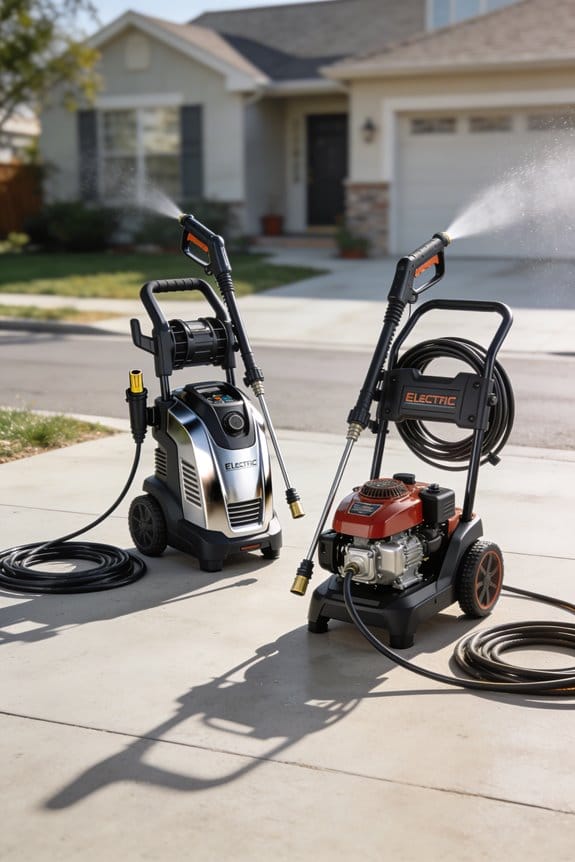
Electric washers usually top out around 2,700 psi and push about 1.3 GPM. Gas units hit roughly the same pressure—about 2,600 psi—but they crank out a bigger stream, often 2.3 GPM, and they can keep that flow going for longer periods. If you need to blast through stubborn grime, the extra water volume from a gas washer keeps the momentum high. For lighter jobs—like cleaning a patio or a car—an electric washer does the trick, especially when you pair it with the right nozzle.
Worth knowing:
- Use a 25‑degree tip for most medium‑hard tasks; it balances pressure and flow nicely.
- Switch to a 40‑degree nozzle on delicate surfaces; the wider spray lowers impact while still getting the job done.
When you match the washer’s flow to the size of the task, you avoid wasting power and fuel. A gas washer can feel overkill for a quick driveway clean‑up, while an electric unit might struggle with a thick, oily driveway. Think about how long you’ll be working, too if you need portability. Gas models are heavier and louder, but they give you that extra push when you need it. Electric units are lighter, quieter, and easier on the wallet, but they may need a longer break between bursts if you’re pushing them to their limits.
Fair warning: don’t let the highest PSI number fool you. A high‑pressure, low‑flow machine can actually be less effective than a slightly lower‑pressure, higher‑flow one for many cleaning jobs. The key is finding the sweet spot where pressure and water volume work together.
Try this: start with the lowest pressure setting that still lifts the dirt, then adjust the nozzle angle until you see a steady spray that covers the area without splashing everywhere. If the surface is fragile, step back to a wider tip and lower the pressure a bit—you’ll protect the material and still get a clean result.
Bottom line? Pick the washer that gives you the right balance of PSI and GPM for the job at hand, and you’ll save time, energy, and money. Ready to test out the perfect combo on your next project?
Which Cleaning Jobs Are Best for Electric Pressure Washers?

Ever wonder why your electric pressure washer seems to get the job done without blowing the neighborhood up? You’ll find that electric models shine when you need a lightweight, quiet tool that doesn’t waste water. Think residential patios, walkways, driveways, and car exteriors—places where portability and low noise matter more than raw power. I recommend them for routine deck washing, fence brightening, and patio tile scrubbing because the 1‑1.3 GPM flow lifts surface grime without soaking everything. They also handle light‑weight appliance cleaning, like washing washing‑machine exteriors or dryer vents, where the zero‑emission, eco‑friendly design fits indoor use. The 2‑minute start‑up and quiet operation let you work on suburban sidewalks without disturbing neighbors. Test data shows a 2700 psi, 1.2 GPM model removes mildew in 5 minutes, confirming suitability for most residential upkeep tasks while keeping energy costs low.
Worth knowing:
- A 1‑1.3 GPM rate gives enough pressure for everyday grime without over‑saturating surfaces.
- Quiet motors mean you can clean early mornings or evenings without complaints.
Try this:
- Start with a wide‑angle spray to loosen dirt, then switch to a narrower nozzle for stubborn spots.
- Keep the hose coiled loosely to avoid kinks that could reduce flow.
Frankly, if you’re only cleaning a few square feet a week, an electric washer will save you time and money. It’s also a good fit for indoor chores where a gasoline engine would be a hassle. The low‑emission design means no fumes, so you can safely clean a garage or laundry room.
So, does your current setup feel too loud or heavy for quick clean‑ups? Switching to an electric unit might be the simple fix you’ve been missing.
What’s the first job you’d tackle with a quieter, greener pressure washer?
Which Jobs Exceed Electric Pressure Washer Capabilities?

Ever you you to clean a big, oily floor and the electric washer just can’t keep up? You’ll quickly notice the motor whining and the water flow dropping off. Those moments are when you realize a gas‑powered unit is the only way to get the job done right.
When you’re dealing with heavy‑duty jobs—like stripping oil‑laden industrial floors, blasting stubborn grease off commercial kitchen hoods, or erasing thick graffiti from concrete walls—electric pressure washers fall short. The motor can’t sustain the 2‑3 GPM you need at 2700 psi without overheating. That means you end up with streaks, half‑cleaned spots, and a lot more elbow grease.
Worth knowing:
- Gas units deliver 3‑4 GPM, so the detergent mixes fully and rinses away cleanly.
- They keep the pressure steady, even on large metal tanks or deep oil stains on driveways.
If you’re cleaning a massive concrete driveway with deep oil stains, the electric model’s limited flow leaves residue that’s hard to get rid of. You’ll find yourself going over the same spot again and again, wasting time and water. A gas‑powered washer keeps the flow steady, so the water and soap work together to lift the grime in one pass.
For tasks that need more than 2700 psi and 1.5 GPM—especially extensive grease removal—a gas pressure washer is the practical choice. The higher flow and pressure mean you can finish faster and avoid the frustration of a motor that constantly shuts down.
Fair warning: gas units are louder and need regular maintenance, but the payoff is a clean that looks like it was done by a pro. So next time you’re faced with a big, dirty surface, think about whether an electric washer can really handle the load.
Do you have a favorite gas‑powered model that’s saved you time on a tough job? Let’s hear about it.
How Does Portability and Noise Affect Indoor Versus Outdoor Cleaning?

Ever tried to clean a garage and realized your pressure washer’s cord is a nightmare in tight spots?
A lightweight, corded washer lets you zip from room to room without lugging a heavy tank, but that same cord can become a tripping hazard when space is tight. If you can handle a battery’s 30‑minute run time, a cordless model removes the tripping risk and keeps indoor noise below 65 dB, which is nice for your ears and your neighbors.
Worth knowing:
- Keep the hose short to cut pressure loss.
- Put the washer on a stable surface.
- Wear ear protection only when the sound tops 68 dB.
Outdoor work tells a different story. The longer reach of a corded unit supplies steady power up to 1.3 GPM, and the ambient noise blends with the outside world, staying under 70 dB. You’ll appreciate the steady flow when you’re rinsing a driveway or cleaning a patio.
Frankly, the key is matching the tool to the space. Cordless for indoor jobs where you need mobility and low noise, corded for outdoor tasks that demand power and longer reach.
Try this: test the battery life on a small indoor job first. If it holds up, you’ve got a safe, quiet solution. If not, switch to the corded version for longer projects.
Balancing mobility, safety, and noise control makes cleaning easier wherever you are.
Got any tips of your own for keeping the workspace safe and quiet?
What Are the Cost‑Benefit Factors of Electric vs. Gas Washers?
Ever stared at a pile of grime and wondered whether an electric or gas pressure washer would be the better fit for your weekend projects?
You’ll find that electric units usually run about $300‑$500 cheaper than their gas‑powered cousins, but they tend to top out around 2,700 psi and 1.3 GPM. Gas models push the pressure a bit higher—up to 2,600 psi—and pump out 2.3 GPM, so they get the job done faster when you’re tackling tough stains.
Frankly, the upfront savings can be tempting, yet gas washers often hold their resale value a bit better because they can handle a wider range of jobs.
Worth knowing:
- Electric: lower purchase price, simpler maintenance (just keep the cord in good shape).
- Gas: higher power, better for heavy‑duty work, but you’ll need to replace spark plugs, clean filters, and use fuel stabilizer.
Operating costs also tilt the scale. An electric washer draws kilowatts, which costs a fraction of what you’d spend on gasoline per hour. Gas units need fuel and oil, so the bills add up faster.
If you mostly clean driveways, decks, or your car, the electric model will likely meet your needs without breaking the bank. But when you’re facing stubborn oil spots or large surface areas, the extra power of a gas washer can save you time, even if you spend a bit more on fuel.
Overall, I’d suggest sticking with an electric washer for everyday residential tasks. For those occasional heavy‑duty jobs, a gas unit is worth the extra cost and effort.
Which type do you think will fit your next project best?
When Are Battery‑Powered Washers a Viable Middle Ground?
Can a battery‑powered pressure washer really fill the space between a corded electric unit and a gas‑guzzler? If you’re tackling light‑ to medium‑duty jobs and need to move around without a cord, it’s worth a look—especially when you can plug into an outlet for a quick recharge now the job site.
Battery life has come a long way. You can now run about 60 minutes straight at 2000 psi, which covers most home projects. A fast‑charge cycle gets you back to 80 % in under half an hour, so you won’t be waiting forever. Look for a model that pushes at least 1.5 GPM; lower flow rates just make the job take longer.
- Worth knowing:
- Pick a unit with a 1.5 GPM rating or higher.
- Keep an eye on battery health; replace cells if you notice a big drop in run time.
- Store the washer in a dry place to protect the battery and motor.
Use it on patios, walkways, and small decks where gas fumes would be a problem and a cord would get in the way. It’s also handy for quick clean‑ups on cars or outdoor furniture when you don’t want to lug a hose around. Just remember that bigger commercial jobs, heavy‑duty stripping, or anything that runs past the advertised battery life will see a sharp drop in performance.
Frankly, you’ll get the most out of a battery pressure washer when you match the task to its strengths. If you can plan for a short recharge break and stay within the 1.5 GPM flow range, you’ll find it a solid middle ground. Ready to try one on your next DIY project?
Frequently Asked Questions
Do Electric Pressure Washers Work With Hot Water Attachments?
I’ll tell you straight: most electric washers can hook up hot attachments, but they’re capped at modest temperature limits—usually under 140°F—so you won’t scorch surfaces, just warm‑up grime.
Can I Use an Electric Washer on a Three‑Phase Outlet?
I can’t plug an electric washer into a three‑phase outlet without a motor phase conversion; most units expect single‑phase power, so you’d need a compatible converter or a model specifically built for three‑phase use.
What Warranty Coverage Is Typical for Electric Versus Gas Models?
A quick glance tells you most electric units offer three‑year warranty duration, while gas models typically stretch to five years; coverage exclusions usually include wear‑and‑tear parts, misuse, and unauthorized repairs.
Do Electric Units Require Special Grounding or Surge Protection?
I always plug my washer into a grounded outlet and add a surge‑protected strip; the ground fault interrupter prevents shocks, and the surge protection guards the motor from voltage spikes.
How Does Altitude Affect an Electric Pressure Washer’s Performance?
I’ll tell you that thin air reduces density, so pressure drops; motor stress rises, and water flow weakens. At altitude, expect lower PSI, slower cleaning, and a hotter, harder‑working motor.