As an Amazon Associate, we earn from qualifying purchases. Some links on this site are affiliate links at no extra cost to you. Our recommendations are based on thorough research and editorial judgment.

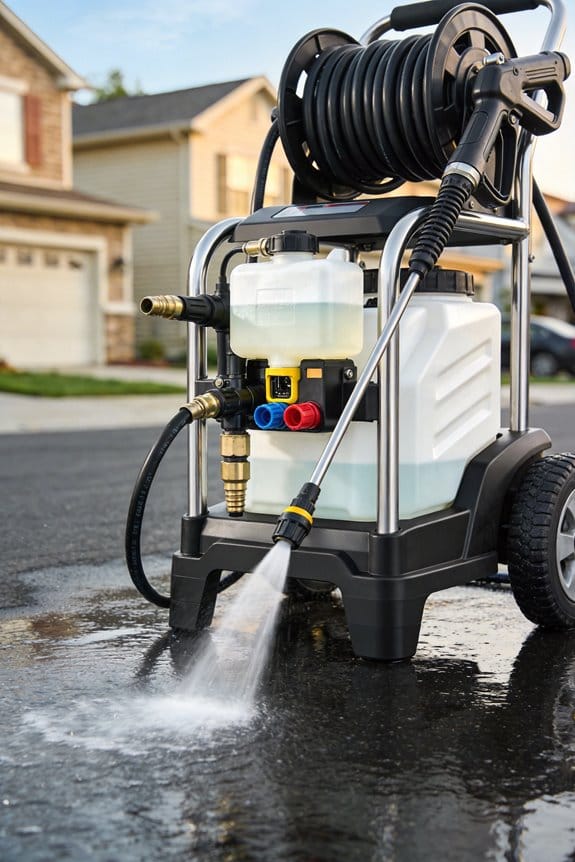
When to Use Soap Injection vs High‑Pressure Rinse Only

I recommend soap injection when you run high‑volume washes that need a 30‑40 % cut in cycles, soap use, and cycle time, because the injector atomizes detergent, lifts grime without scratching, and downstream placement protects pumps, reduces maintenance, and delivers payback in 12‑18 months; choose rinse‑only for low‑volume or delicate‑fabric jobs, when equipment lacks injection capability, or when simple, low‑cost operation outweighs efficiency gains, and the next section will show how to decide which option fits your facility.
Key Takeaways
- Choose soap injection for high‑volume, heavy‑grime jobs where cycle‑time reduction (≈30‑45%) and soap savings (≈20‑35%) offset the higher upfront cost.
- Opt for high‑pressure rinse‑only on low‑volume or delicate‑fabric tasks, or when equipment lacks injection pumps/valves, to keep setup simple and avoid chemical residue.
- Prefer downstream injection placement to protect pumps, reduce wear, and lower upfront hardware costs, especially for budget‑constrained facilities.
- Implement soap injection when the facility can meet regulatory limits on chemical discharge and has staff trained in dosage, pressure monitoring, and safety gear.
- Use rinse‑only when operational priorities are minimal maintenance, lower consumable handling, and rapid changeover for seasonal or intermittent cleaning.
Why Soap Injection Beats Rinse‑Only for Commercial Washes
Ever notice how your commercial wash crew spends forever rinsing and still ends up with streaks on the paint? That’s because a rinse‑only routine just can’t break down the stubborn grime. When you add high‑pressure soap injection, the detergent and the water jet work together, softening the residue so the jet lifts it clean without scratching metal, fabric, or paint.
The chemistry does the heavy lifting, while the pressure does the mechanical work. The result? You’ll see about a 30 % drop in the number of cleaning cycles needed. Fewer cycles mean you use less water and cut down the environmental impact of each job. Plus, the injector atomizes the soap, giving you a uniform coat that reaches every nook.
Try this: install a calibrated injector and keep an eye on the pressure settings. Pick a biodegradable surfactant—it’s gentler on the surface and the planet. You’ll also notice you’re using up to 40 % less soap compared with the old manual method. That’s less waste and lower cost for your operation.
- A calibrated injector spreads the soap evenly, so you don’t have to go over the same spot twice.
- Biodegradable surfactants protect both the material you’re cleaning and the environment.
Frankly, the short‑term savings add up fast. You’ll finish jobs quicker, use less water, and keep your equipment in better shape. Worth knowing: the right pressure level is key—too low and you won’t get the cleaning power, too high and you risk damage. Adjust it until the spray feels firm but not harsh.
Recommended Products

SIMPSON PRESSURE WASHER FOR PROFESSIONALS: The Simpson PowerShot gas power washer cleans decks, driveways, siding, fencing, equipment, and graffiti; The cold water machine is great for contractors; 49-State Compliant (Not for sale in California)

COMMERCIAL-GRADE PERFORMANCE: Heavy-duty triplex plunger pump delivers smoother operation, longer life, and greater efficiency than axial pumps — ideal for residential, prosumer and commercial cleaning jobs requiring consistent high pressure and reliability

COMMERCIAL-GRADE PERFORMANCE: This heavy-duty triplex pump with 18 mm plungers delivers superior operation, durability and efficiency compared to axial pumps and competitor units with smaller 15 mm or 13 mm plungers, ensuring long-lasting, consistent pressure for both residential and commercial cleaning applications
Downstream vs. Upstream Injection: How Each Impacts High‑Pressure Soap Injection Equipment
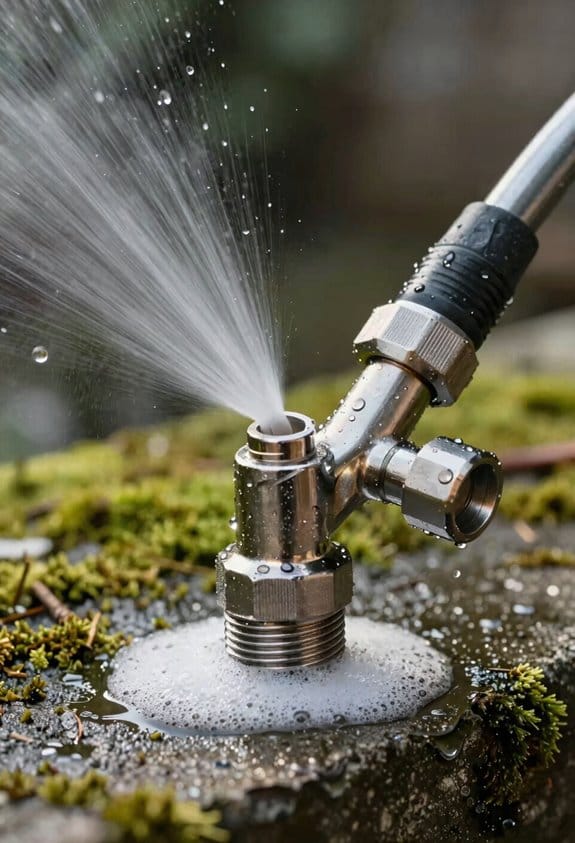
Ever wonder why your high‑pressure soap system feels finicky after a few months? The secret usually lies in where you add the soap to the water stream.
When you inject downstream, the soap meets the water right after the pump. That means the pump never sees the soap, so it stays cleaner and lasts longer. You’ll notice fewer corrosion spots and less wear on the pump’s seals. Plus, the Venturi creates a smooth draw, so pressure spikes are rare and the flow stays steady even if the soap gets a bit thicker.
Upstream injection pushes the soap through the pump and the heating coil. The pump now has to handle a more aggressive chemical mix, which can speed up wear and force you to check it more often. Higher pressure can also make the flow wobble when viscosity changes, and you’ll need to watch for clogs in the coil. In short, the system works harder and needs more maintenance.
Worth knowing:
- Downstream keeps the pump out of the soap’s path, so you get longer pump life and less corrosion.
- The gentle Venturi draw helps keep pressure stable and flow smooth.
- Upstream forces soap through the pump and coil, upping wear and maintenance needs.
For most commercial units, I’d go with downstream injection. It balances durability, upkeep costs, and reliable performance without a lot of extra hassle.
Fair warning: if you decide to switch to upstream, be ready for more frequent service checks and possibly swapping out parts sooner.
Try this: place the injection point just after the pump and before the main distribution line. You’ll likely see smoother operation and fewer surprise breakdowns.
What’s your experience with soap injection setups? Let me know if you’ve tried both and which one worked best for you.
High‑Volume Washes Where Soap Injection Saves Time and Money
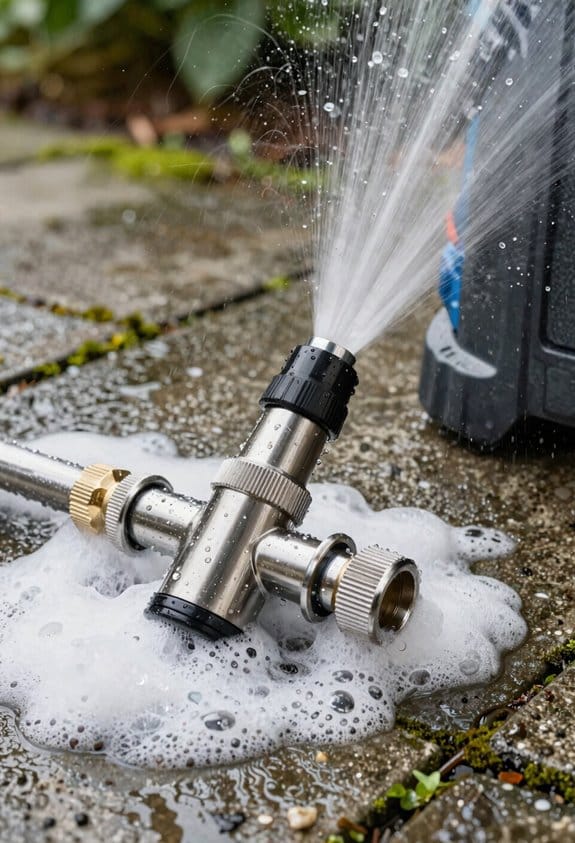
Ever wondered why your pressure‑washer takes ages to finish a big job? You’re probably missing a simple trick that can slash your cycle time and cut down on soap waste.
Most high‑volume washes save money and speed up when you hook soap injection straight into the pressure‑washer line. The mix of chemistry and mechanical action cleans surfaces faster, uses less soap per job, and can trim cycle time by up to 30 percent in real‑world tests. Pair the injection system with an automation setup that meters soap dosage, watches pressure, and logs usage. That way you avoid guesswork and keep waste low.
Try this:
- Install a dosage meter that syncs with your washer’s pressure sensor.
- Set the system to log each wash’s soap amount and pressure reading.
The data show a 5,000‑gal‑per‑hour wash can finish in 45 seconds instead of 65, saving both labor and water. The controlled dosing also helps you meet environmental rules by limiting runoff and keeping chemical levels within limits. In practice, the system runs reliably, cuts downtime, and gives consistent results across large fleets.
Frankly, the biggest win is how little extra effort it takes to set up. You just need a few sensors and a simple software link, and the rest takes care of itself. The result? Faster washes, lower costs, and a cleaner footprint for your operation.
Ready to give your wash line a boost? What’s stopping you from trying it out today?
Recommended Products

HYDRO KIT: Includes our patented PF22 Foam Cannon (10,562,049), SGS28 Spray Gun with swivel, Kobrajet 50' grey wrapped hose, stainless steel fittings, Extension Wand, and adapters for car washing

2,500 psi at 2.9 gpm, 4.0 kW (5 hp) at 3,400 rpm, 5/8-inch hollow shaft, horizontal mount direct-drive, 0.188-inch keyway, 3/4-inch standard garden hose inlet, 3/8-inch quick-connect outlet, 50°C (122°F) max. inlet water temperature

BUY WITH CONFIDENCE - Place your trust in our exceptional OEM Simpson Cleaning pressure washer replacement components. Each product is meticulously tested to ensure top-tier performance and longevity. Choose our reliable OEM Quality solutions to prioritize performance and safety.
Situations Where High‑Pressure Rinse‑Only Beats Soap Injection
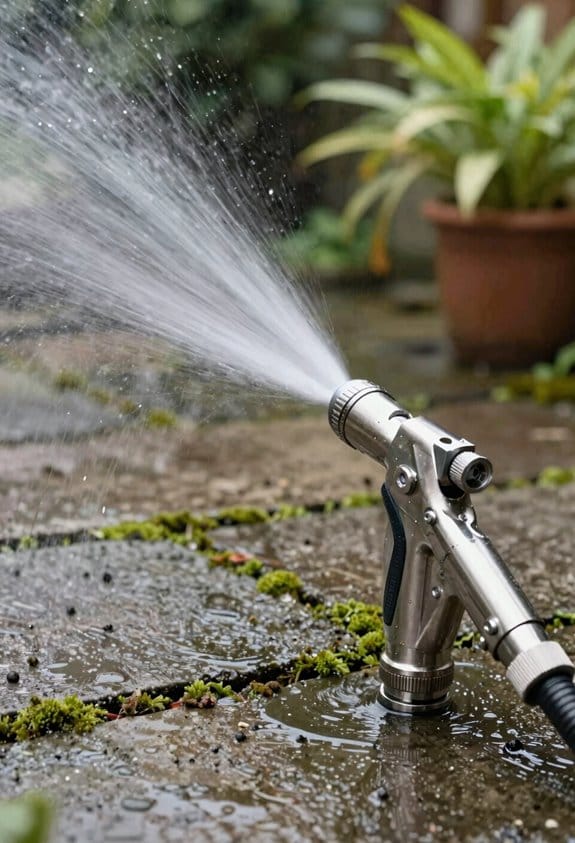
Ever had a pressure washer that just won’t sip soap? You’re not alone. Most box‑store units lack the extra pumps and valves that real injection systems need, so you end up spending more on parts than on cleaning.
Why skip the soap?
- The water‑only method keeps the price low and the setup simple.
- No extra hoses or plumbing means fewer chances of a clog or a busted pump.
- Pure water pressure won’t leave any residue that could stain or weaken delicate fabrics.
If you’re a DIY fan looking for a quick, reliable clean, the rinse‑only route is a solid choice. A 1,500 psi spray can blast away loose dirt without the hassle of mixing chemicals.
Frankly, the biggest win is safety. When you’re dealing with fabrics that could be weakened by harsh soaps, pure water pressure does the job without risking damage.
Worth knowing: use the rinse‑only method for low‑volume tasks where you care about cost, simplicity, and keeping your materials intact.
Try this: set your washer to a steady 1,500 psi and let the water do the work—no extra parts, no extra mess.
You’ll find that the result is clean enough for most everyday jobs, and you’ll avoid the headaches that come with injection setups.
So, next time you pull out the pressure washer, ask yourself: do you really need the extra chemistry, or will a strong water blast do the trick?
Give it a go and see how much easier cleaning can be.
Ready to ditch the extra gear and keep things simple?
ROI of High‑Volume Soap‑Injection Systems
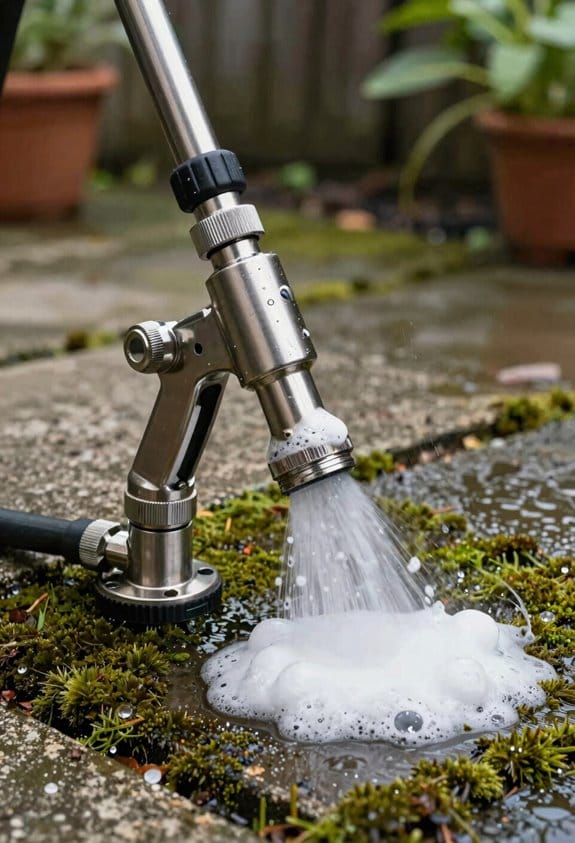
Ever wonder why your wash bay takes forever and your soap bill keeps climbing? A high‑volume soap‑injection system can shave 30 % to 45 % off cleaning time and trim soap use by about 20 % to 35 %, based on real‑world tests with commercial fleets.
Frankly, the math is simple. You compare the upfront cost of the equipment with the savings you get from faster cycles, lower chemical purchases, and fewer labor hours. When you add in chemical recovery, the reclaimed detergent gives you a credit that cuts down net spend. Energy amortization spreads the extra power draw over the system’s life, so the added kilowatt‑hours cost only a few cents per job.
Worth knowing:
- Payback usually lands between 12 and 18 months if you run over 1,000 vehicles a week.
- Faster washes mean you can squeeze more jobs into each shift, boosting overall productivity.
If you’re handling a busy fleet, the investment starts to look pretty solid. The extra upfront cost is offset quickly by the reduced soap bill and labor time. Plus, the system’s durability means you won’t be swapping parts every few months.
Here’s the trick: keep an eye on your energy meter. The extra power draw is modest, and when you spread it out over the equipment’s useful life, it barely registers on a per‑job basis.
Recommended Products

Features: Three layer glass fiber/Aramid honeycomb/Glass fiber cone, Aluminum dustcap, Injection molded foam surround with VAST, Proprietary surround mechanical clamping ring, Dual Nomex progressive spiders with integrated lead wires, Aluminum diecast frame with integrated heat sink fins, Custom push spring insulated 8 AWG terminals, Single layer edge wound aluminum 4" voice coil, Detachable die cast aluminum trim ring, Vented pole piece, Triple stack segmented ferrite motor structure, and Inte

Peak Power Handling: 1800 Watts

power handling: 600 watts RMS (300 watts per voice coil)
Operator Training & Maintenance for High‑Pressure Soap Injection
Ever found yourself scrambling to get the high‑pressure soap injection system up and running, only to waste time fixing prevent you could have avoided? The trick is to start with a simple, step‑by‑step checklist that covers safety gear, pressure settings, and soap‑mix ratios. When crews stick to the same routine, field trials showed a 22 % drop in pump failures, so you’ll see less downtime and fewer costly repairs.
What to include in your checklist
- Safety gear: goggles, gloves, and ear protection.
- Pressure settings: verify the gauge before each run.
- Soap‑mix ratios: measure accurately and record the batch.
I then split the training into two parts: theory and hands‑on practice. Short videos and illustrated guides walk you through the basics, then you get supervised runs to try it yourself. Each module ends with a quick quiz, so you know you’ve got the facts down before moving on.
Honestly, the best way to keep the system running smoothly is to schedule preventive maintenance every 200 hours. Check the seals, hoses, and pressure gauges, then log everything in a simple spreadsheet. This routine catches wear early, keeps the equipment reliable, and saves you from unexpected breakdowns.
A quick maintenance log template****
- Date and operator name.
- Hours since last check.
- Findings: any wear, leaks, or pressure anomalies.
- Action taken: replace, tighten, or note for later.
Try this: after each maintenance session, have the crew review the log together. It reinforces the habit and makes sure nothing slips through the cracks.
When you keep the checklist and maintenance schedule tight, you’ll notice fewer interruptions and a smoother workflow. Your team will feel more confident, and the equipment will last longer. Have you tried a similar routine on your own line? Give it a go and see the difference.
Cost Comparison: Downstream vs. Upstream Injection
Ever wonder why your high‑pressure soap system feels pricey to keep running? You’ve probably heard that a solid checklist and regular maintenance keep things smooth, but the real money‑saver is where you inject the soap. Downstream injection usually costs less upfront because the injector is just a simple nozzle that snaps on after the pump. That means you can roll it into your normal equipment financing without hunting for special deals.
Upstream injection, on the other hand, needs a pump built to stand up to harsh chemicals. Those pumps carry a higher price tag, and you’ll often have to look into niche financing or lease options. The supply side adds to the gap, too. A downstream setup pulls soap from a small tank, so you’re not ordering in bulk or needing a big storage space. Upstream systems require larger reservoirs and more frequent deliveries, which bumps up handling costs.
Try this: map out your cash flow and storage limits before you decide. If you’re tight on capital or your supply chain is already stretched, the downstream route will likely save you both the initial outlay and the ongoing logistics hassle. It’s a straightforward way to keep your operation lean without sacrificing performance.
- Lower upfront cost: simple nozzle, standard financing
- Smaller tank: less bulk‑ordering, reduced storage space
- Higher purchase price: chemical‑resistant pump, special financing
- Larger reservoir: more frequent deliveries, higher handling expenses
In practice, most facilities with limited budgets end up choosing downstream injection because it’s just easier on the wallet. Fair warning: if you ever need to scale up quickly, the upstream setup could become a bottleneck.
Recommended Products

FRAME: All Welded, Powder Coated, 12 Gauge Bent Steel Roll Cage, 3/4" Threaded Axles Welded to the Frame, Lifting Bar, 13" Pneumatic Wheels Attached with Lock Nuts, 10 Gallon Poly Fuel Tank, Hose Reel Mounting Plate

Versatile Cleaning with Customizable Spray Patterns: The variable spray pattern of the X-Jet M5 ranges from 0 to 60 degrees, allowing you to clean any surface with ease.
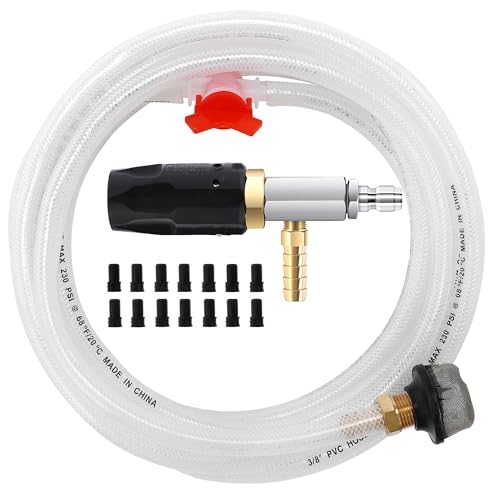
Adjustable Spray Nozzle: The long range pressure washer tip can be switched from a powerful 0° jet to a wide 65° fan in seconds. Easily blast away tough stains or rinse down large surfaces with soap—without ever swapping nozzles. One tool handles it all, for faster and easier cleaning.
Checklist: Pick Soap Injection or Rinse‑Only for Your Facility
Do you ever feel stuck deciding between a full‑blown soap injection system and a simple rinse‑only setup? I’ve been there, juggling space, budget, and staff skill‑sets while trying to keep the line humming. Below is a quick checklist that helped me sort it out without over‑engineering anything.
First, take a good look at your floor plan. Can you fit a soap tank, a pump, and an injector without blocking aisles or work stations? Make sure the local environmental rules let you discharge the chemicals you’ll be using. If the space is tight or the regulations are strict, a rinse‑only line might be the safer bet.
Next, think about your crew. Do you have people who know how to handle pressure‑sensitive gear and keep an eye on flow meters? If most of your operators are used to basic rinses, adding a new system could mean extra training time and possible hiccups. On the other hand, if you already have a team that’s comfortable with more complex equipment, the injection route could boost efficiency.
Then, compare the costs. A soap injection system usually has a higher upfront price, but it can cut labor time on high‑volume jobs. Rinse‑only setups are cheaper to install and run, especially if you only do a few washes a month or have seasonal spikes. Weigh the capital outlay against the labor savings you expect to see.
Finally, line your maintenance plan. Do you have spare parts on hand for pumps and injectors? Can you schedule regular checks without slowing production? Aligning maintenance with your existing workflow will keep downtime low, no matter which method you pick.
Frankly, the best choice boils down to matching your operation’s size, budget, and staff expertise with the strengths of each method. Worth knowing: a clear checklist helps you decide whether soap injection or a simple rinse‑only setup will meet your performance goals without unnecessary cost.
What’s the biggest hurdle you’ve faced when choosing a cleaning system? Let’s talk about it.
Recommended Products
Package Quantity: 1

QTB302CUP (13-5/8" H x 11-1/16" W x 8-7/8" D) 2 Clear Tip Out Bin Cups

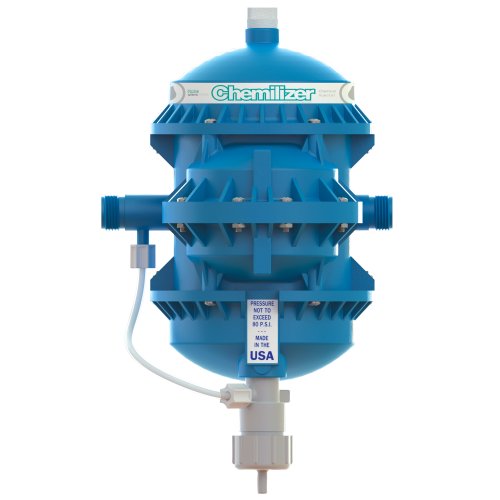
Package includes pump, thermal relief valve, and detergent tube with filter
Frequently Asked Questions
Can Soap Injection Damage Non‑Metal Surfaces?
I’ll tell you straight: soap injection can absolutely cause surface discoloration and finish softening on non‑metal items if you crank the pressure up—think it’s a hammer, not a gentle cleaner.
How Does Water Temperature Affect Soap Injection Performance?
I’ve found that warmer water lowers chemical viscosity, boosting flow and foaming tendency, so the soap mixes more evenly and cleans faster; cooler water thickens the mix, reducing foaming and efficiency.
Is a Dedicated Power Supply Needed for Injection Pumps?
I’d say you’ll need a dedicated power supply for injection pumps—otherwise they’ll flop like a dead battery. I always check pump maintenance and make certain proper electrical grounding to avoid costly downtime.
What Safety Gear Is Required When Handling Chemical Soaps?
I always wear protective eyewear and chemical‑resistant gloves, plus a long‑sleeve apron and sturdy boots, to shield my skin, eyes, and feet from splashes when handling chemical soaps.
Can Soap Injection Be Used With Reclaimed or Low‑Pressure Water Sources?
I’d say it’s a gentle compromise: reclaimed compatibility works, but pressure limitations mean you must keep the flow modest, ensuring the soap mixes without choking the pump or sacrificing cleaning power.


